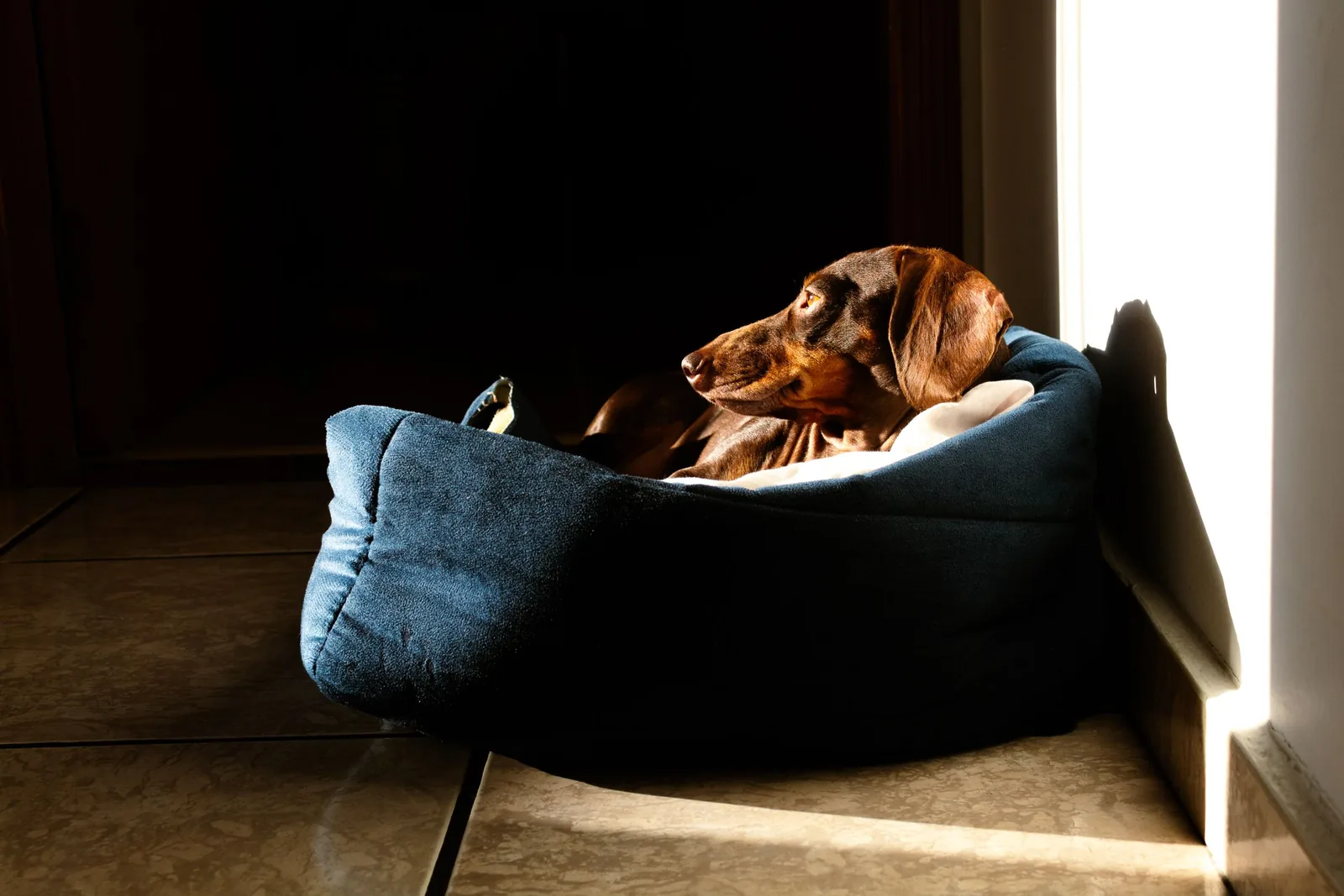
How Thick Should an Orthopedic Dog Bed Be? (Size Chart)
As a rough guide, small dogs under 25 pounds do well with 3 to 4 inches of supportive foam, medium dogs with 4 to 5 inches, and large or giant breeds with 5 to 7 inches. Whatever the number, your dog should never bottom out — hips and elbows shouldn’t press through to the floor.
As an Amazon Associate, SumpPick Dogs earns from qualifying purchases. This doesn’t change our picks.
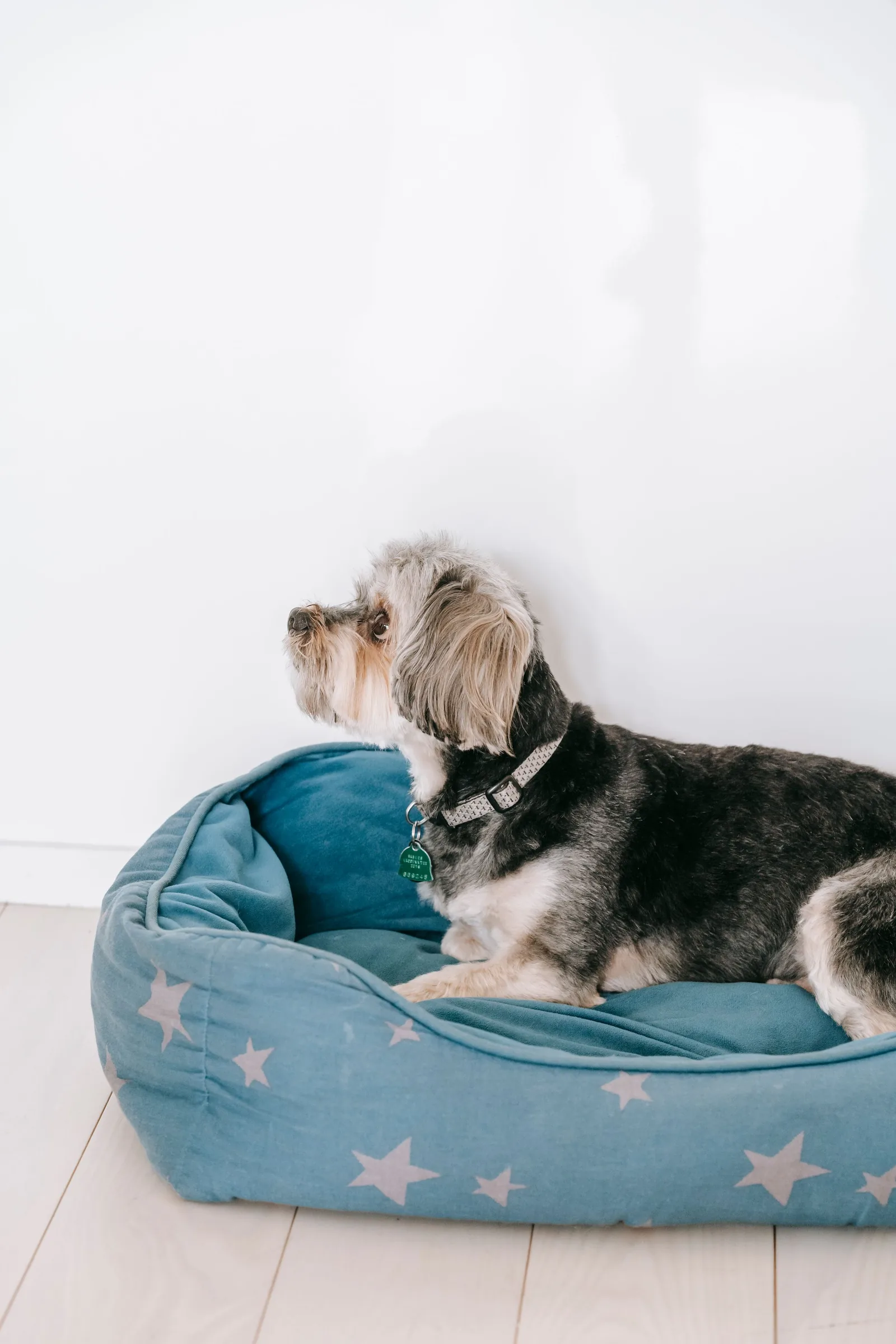
Why Thickness Matters: The Bottoming-Out Test
The whole point of an orthopedic bed is to keep your dog’s body off the hard floor. If the foam is too thin, a heavy dog simply compresses it flat, and their hips, elbows, and shoulders end up resting on the ground anyway.
There’s an easy way to check any bed, in the store or at home. Press your hand — or even your knee — firmly into the middle of the bed. If you can feel the floor through the foam, a dog lying there will feel it too.
When your dog is lying on the bed, their hips and elbows should stay cradled in the foam, not touch the floor beneath it. If they do, the bed isn’t thick or dense enough for their weight.
Orthopedic Dog Bed Thickness Chart
Use this chart as a starting point. These are general ranges based on weight — heavier dogs compress foam more, so they need more of it.
| Dog weight | Suggested foam thickness | Foam type to look for |
|---|---|---|
| Under 25 lb | 3–4 inches | Solid memory foam, or memory foam over a dense base |
| 25–50 lb | 4–5 inches | Solid or layered memory foam |
| 50–90 lb | 5–7 inches | Multi-layer, high-density foam |
| 90 lb and up | 7 inches or more | Multi-layer, high-density foam built for giant breeds |
Remember, these numbers describe the supportive foam under your dog — not the total height of the bed including pillows and bolsters.
Foam Type Matters More Than Total Height
A tall bed isn’t automatically a supportive bed. What’s inside counts for more than the number on the label.
Solid or layered memory foam is the gold standard for seniors. It molds to the body, cushions joints, and may ease pressure on sore hips and elbows. Layered designs often pair a firm base with a softer comfort layer on top.
Egg crate foam (the wavy, convoluted kind) is lighter and cheaper. It can work for smaller dogs, but owner reviews of egg-crate beds often mention flattening under heavier dogs over time.
Polyfill is basically stuffed pillow material. It’s soft, but it shifts and packs down quickly. It’s fine for bolsters — not for the main support surface of a senior dog’s bed.
One more thing: bolsters don’t count toward support thickness. A bed listed as “7 inches tall” might have only 3.5 inches of foam under your dog, with puffy bolsters making up the rest. Always look for the thickness of the base foam itself.
The Trade-Off for Seniors: Thicker Means a Higher Step
Here’s the catch with thick beds. A 7-inch slab of foam is wonderful for a big dog’s joints, but it’s also 7 inches off the ground. For a senior with very weak or shaky legs, climbing onto a tall bed can be a genuine hurdle.
If your dog struggles with steps, look for a bed that’s thick enough to support them but still easy to walk onto. Flat mattress-style beds with a low profile are a good compromise for smaller and medium seniors. Some beds also leave one or more sides open, which lowers the entry edge.
Watch your dog the first few days. If they hesitate or avoid the bed, step-in height — not comfort — may be the problem.
How to Choose (and Measure Your Dog)
Thickness is only half the equation. The bed also needs to be big enough for your dog to actually use it.
To find the right length, measure your dog from the tip of the nose to the base of the tail, then add 6 to 12 inches. Sprawlers need the full extra foot; curlers can get by with less.
Then run through this quick checklist:
- Match thickness to weight using the chart above.
- Check the foam type — solid or layered memory foam for most seniors.
- Ignore bolsters when comparing thickness numbers.
- Think about step-in height if your dog’s legs are weak.
- Look for a washable cover, because senior accidents happen.
- Check for a non-slip bottom so the bed stays put on hard floors.
Examples From Our Roundup, by Thickness
To make this concrete, here are the thickness specs of the beds in our best orthopedic dog beds for senior dogs with arthritis roundup. That guide has our full picks; prices change, so check the current price on Amazon.
| Bed | Support foam thickness | Best for |
|---|---|---|
| Bedsure Memory Foam Dog Bed, Large (crate pad) | 3 in dual-layer memory foam | Budget pick; low profile, easy to step onto; crate use |
| Furhaven Memory Foam L-Shaped Chaise, Large | 3 in memory foam base | Medium dogs who curl up or prop their head |
| PetFusion BetterLounge Orthopedic Dog Bed, XL | 3.5 in solid memory foam | Dogs who like to lean on bolsters |
| Big Barker 7″ Pillow Top, Large | 7 in, in 3 layers | Large and heavy senior dogs |
| KOPEKS Orthopedic Memory Foam Bed with Pillow, XL | 7 in, plus a 3 in headrest pillow | Big dogs who sprawl |
The Bedsure Memory Foam Dog Bed, Large is a flat, low-profile pad — 3 inches of dual-layer memory foam, with a soft memory foam top over a supportive base layer. It’s the easiest bed here to step onto, it works as a crate pad, and the flannel cover zips off for machine washing. The trade-off: a thin, bolster-free pad like this won’t be enough for heavier dogs, and it’s not for chewers.
The PetFusion BetterLounge, XL pairs a 3.5-inch solid memory foam base with solid foam bolsters on two sides. With the bolsters, it stands about 7.5 inches tall — a good example of why bolster height shouldn’t be counted as support thickness. The foam sits inside a waterproof liner, the micro-suede cover is machine washable, and it’s listed as ideal for large breeds. Still, that 3.5-inch base is thinner than the Big Barker or KOPEKS, which is worth keeping in mind for very heavy dogs.
The Furhaven L-Shaped Chaise, Large has a 3-inch memory foam base with fluff-filled bolsters on two sides and two open sides for easy entry. It’s listed for dogs up to 55 pounds, so it suits medium to medium-large seniors who curl up or prop their head on an edge. Note that the bolsters shrink the sleep area to about 32 x 23 inches, 3 inches is thin for a big dog, and the foam itself shouldn’t be soaked.
For big dogs, the Big Barker 7-inch Pillow Top stacks three foam layers, and the KOPEKS XL offers 7 inches of memory foam plus a 3-inch pillow. Both are a real step up off the floor, though — something to weigh if your senior’s legs are very weak.
A supportive bed can cushion aging joints and may ease pressure on sore spots, but it isn’t a treatment for arthritis or any other condition. If your dog seems stiff, sore, or reluctant to lie down or get up, talk to your vet about the best plan for their comfort.
Frequently Asked Questions
How thick should a dog bed be for a large dog?
For dogs in the 50 to 90 pound range, aim for 5 to 7 inches of quality foam. For giant breeds over 90 pounds, 7 inches or more of multi-layer, high-density foam is a safer bet. The goal is simple: no bottoming out.
Is 4 inches of memory foam enough for a dog?
For small and medium dogs, yes — 4 inches of solid memory foam is usually plenty supportive. For heavier dogs, 4 inches may compress too far, especially if the foam is low density. When in doubt, do the hand-press test in the middle of the bed.
Can a dog bed be too thick for an old dog?
It can. A very thick bed sits higher off the floor, and seniors with weak or unsteady legs may struggle to climb on. If that’s your dog, look for a low-profile mattress style or a thick bed with a low entry edge, and watch whether they hesitate before lying down.
Do bolsters count toward the thickness?
No. Bolsters are usually filled with soft polyfill or foam and sit around the edges of the bed. They make a nice pillow, but they don’t support your dog’s body. Always check the thickness of the base foam, not the total height of the bed.
How do I know if my dog’s bed is too thin?
Press your hand or knee firmly into the center — if you feel the floor, the bed is too thin for your dog. Other hints: your dog avoids the bed, circles restlessly, or seems stiff after sleeping on it. If stiffness persists even on a good bed, check in with your vet.