Dog Ramp vs Stairs: Which Is Better for an Older Dog?
In the dog ramp vs stairs question, a long, gentle ramp with good grip is usually the easier choice for most older dogs with stiff joints, back trouble, or weak back legs, because it avoids lifting each leg step after step. Stairs can work well for steady small dogs and tight spaces. Your dog’s comfort and your vet’s advice decide.
As an Amazon Associate, SumpPick Dogs earns from qualifying purchases. This doesn’t change our picks.
The short answer
If your older dog is stiff, wobbly, or sore in the back end, a ramp with a gentle slope and a grippy surface is usually the kinder option. It lets your dog walk up in one smooth line instead of hopping up step after step.
That said, neither is right for every dog. A confident little dog who has used two low steps for years may keep using stairs happily, and a ramp only helps if it’s long enough to stay gentle.
It’s also worth being honest: there is very little hard research comparing ramps and stairs in dogs. Most of what we know comes from vets’ practical experience, basic geometry, and what owners commonly report at home.
How a ramp and stairs feel different to your dog
A ramp is one continuous gentle incline. There’s no repeated stepping up and no impact of landing on each step, which may be easier on stiff hips, elbows, and backs. The trade-off is space: a ramp needs floor length to stay gentle, and a slope that’s too steep defeats the whole point.
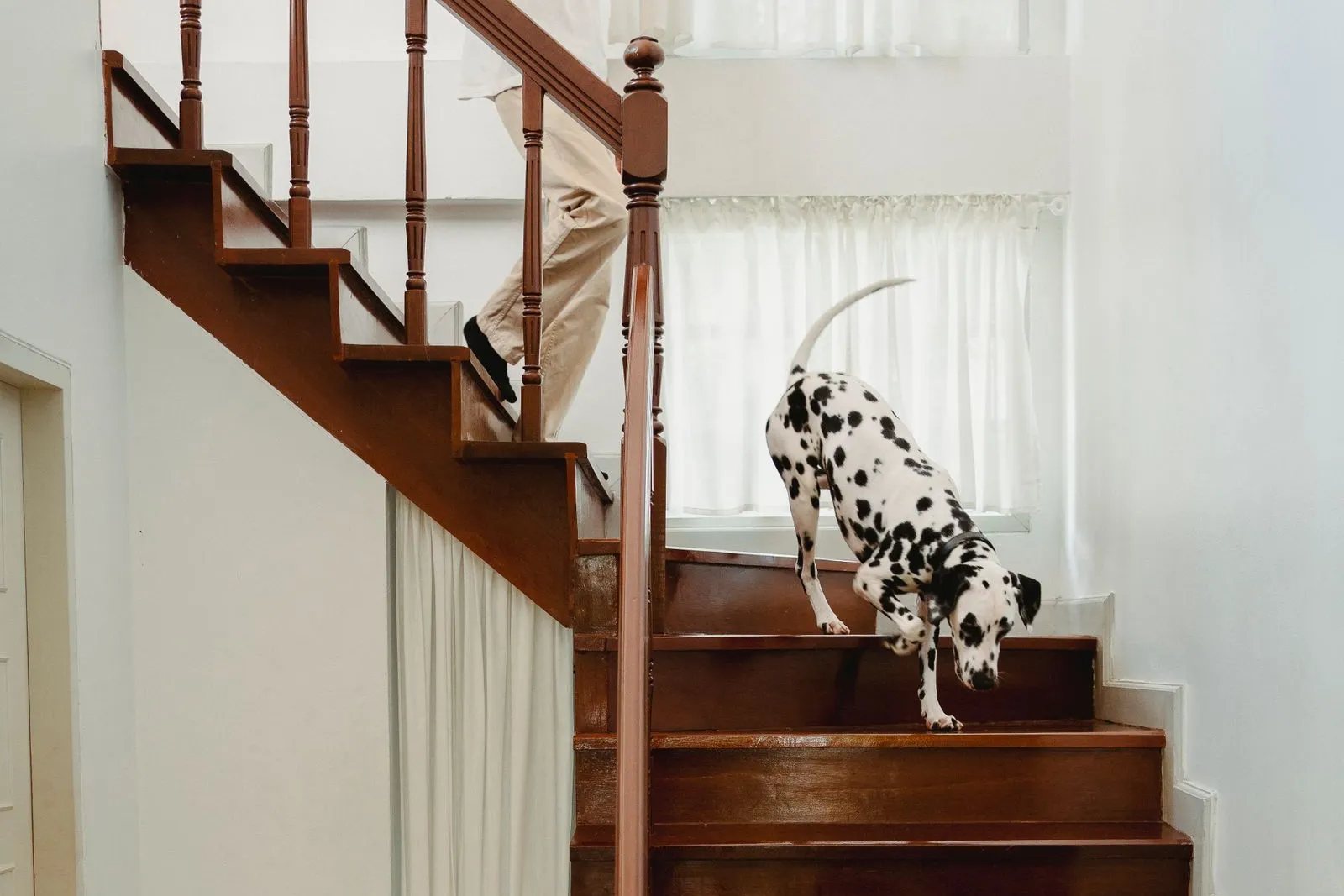
Stairs work differently. Each step means lifting the body up again, and coming down means controlling the body on every landing. Low risers and deep treads make this much easier, and stairs fit into a compact footprint beside the bed or couch.
The vet-reviewed team at PetMD puts it plainly: stairs still require a dog to step up and put some strain on their legs and joints, while a ramp offers a mild incline. PetMD recommends a ramp over stairs for pets with arthritis or other existing joint or back conditions, and notes that small dogs generally do well with stairs while medium and large dogs may prefer ramps.
When a ramp is usually the better pick
- Arthritis or stiff hips and elbows
- Weak back legs
- Back problems, or a breed prone to disc issues such as Dachshunds and Corgis (always with your vet’s guidance)
- Larger, heavier dogs
- Dogs who struggle more going down steps than up
- Getting into a car or SUV
- Dogs who seem nervous about individual steps
When stairs can make more sense
- Small dogs who are steady and confident on a few low steps
- Very limited floor space beside the bed or couch — a ramp needs horizontal length, and making it shorter for the same height just makes it steeper
- Low furniture where only one or two steps are needed
- A dog who already uses steps happily — there’s no need to switch just because ramps are marketed as senior-friendly
Floor space and slope, in plain numbers
Here’s the part most people skip, and it matters. Ramp length is simple geometry: the length you need equals the height divided by the sine of the angle. These are rough numbers from our own math, but they show the pattern.
- For a 20-inch couch or bed: about 58 inches of ramp at a roughly 20-degree slope, or about 77 inches at roughly 15 degrees.
- For a 25-inch bed: about 73 inches at roughly 20 degrees, or about 97 inches at roughly 15 degrees.
There is no single vet-established “safe” angle. Gentler is generally easier for stiff dogs — and gentler always means more floor space. A set of stairs covers the same height in a much smaller footprint, and that’s their biggest advantage. If you’re comparing lengths, our chart of dog ramps for beds, sorted by bed height lays it out size by size.
| Ramp | Stairs | |
|---|---|---|
| How your dog moves | Walks up one continuous gentle incline; no repeated stepping up, no impact of landing on each step. | Lifts the body up each step and controls the body coming down each landing. |
| Floor space needed | Needs horizontal length; a gentler slope means more floor space. | Covers the same height in a much smaller footprint. |
| Best for | Stiff joints, weak back legs, back trouble, bigger or heavier dogs, dogs who struggle going down steps, car or SUV access. | Steady, confident small dogs; low furniture; tight spaces beside a bed or couch. |
| Harder for | Dogs in small rooms where a long, gentle slope won’t fit; dogs nervous about a raised platform. | Dogs with stiff or weak legs, and dogs who hesitate on individual steps. |
| Portability | Many fold; some are light enough to move room to room or use for the car. | Often bulkier and tend to stay put, though they take less floor room if left against furniture. |
| Learning curve | Many dogs need short, positive practice sessions with either option. | |
| Main watch-outs | Too steep, slippery surface, gap at the top, no side edge. | Tall risers, shallow treads, sliding on hard floors, steep foam steps. |
A quick note on moving them around: the AKC points out that ramps are generally easier to fold and often lighter, while stairs take up less floor room if you leave them in place against the furniture.
What owners often run into
In senior dog owner communities, a few patterns come up again and again:
- Some dogs simply jump over or around stairs instead of using them.
- Lightweight plastic or foam steps can slide on hard floors. A grippy rug or mat underneath usually helps.
- A thin carpet surface on some ramps may not feel grippy enough for a wobbly dog.
- Some dogs take to a ramp in a few short sessions; others need weeks of patient practice.
- A very old dog may struggle with the final step from the top of the ramp onto the mattress — a flat top platform that sits level with the mattress matters more than people expect.
- Some owners skip both and lower the bed instead, putting the mattress on the floor or adding a wide, sturdy bench at the foot of the bed.
Three ramp styles to look at
These aren’t reviews — just three common styles, described from their published specs, so you can see what the options look like.
LILYPELLE Foldable Wooden Dog Ramp with Guardrails
A solid wood ramp, 63 inches long with a 17.7-inch wide walking platform and five height settings from 17.7 to 31.4 inches. It has a high-traction rubber walking surface, raised side rails plus a top guardrail, a frame rated for pets up to 200 lb, and it folds with a carrying handle — a style worth a look for unsteady or nervous dogs who need side rails. It’s gentlest at its lower settings and fairly steep at the tallest. Check current price on Amazon.
Alpha Paw PawRamp (Full Size)
A light folding ramp, 40 inches long by 16 inches wide, with four height settings (12, 16, 20, and 24 inches), a no-slip grip carpet surface, and a limit of pets under 80 lb. It arrives assembled, folds flat for storage, and weighs about 13 lb, so it suits people who want a light ramp to move between rooms. Because it’s short, it’s best used at 12–16 inches for couches and low beds; the taller settings get steep for a senior. Check current price on Amazon.
Topmart Extended 3-Step Foam Pet Ramp
A stepped foam slope — a middle ground between stairs and a ramp — about 15.7 inches high with an elongated 33.1-inch depth for a shallow stride. It has a high-density foam core, a corduroy top for grip, and a non-slip bottom, and it’s marketed for short-legged breeds like Dachshunds, Corgis, and French Bulldogs on low couches, daybeds, and mattress-on-floor setups. No weight limit is stated, so it’s best for small dogs, and it only reaches about 16 inches. Check current price on Amazon.
For the complete side-by-side comparison, see our full roundup of dog ramps for beds, sorted by bed height.
How to choose between a ramp and stairs
- Measure the height. Floor to the top of the mattress or cushion, including any topper.
- Measure the floor space you can give up. This one number often settles the ramp-or-stairs question for you.
- Watch how your dog moves now. Do they hesitate on steps, slip, struggle more going down, or bunny-hop the back legs?
- Check the grip. Carpet, rubber, or textured surface on every surface the paws touch, plus a non-slip base.
- Check stability. It should not wobble, slide, or tip.
- Match the design to your dog. For ramps, look for a flat top landing level with the bed, and side rails or raised edges for unsteady or low-vision dogs. For stairs, look for low risers, deep treads wide enough for the whole body, and enough steps for the height.
- Check the weight limit — with margin.
- Plan for practice. Short, positive sessions with small rewards, starting low. Never force it.
And if you simply can’t make a ramp or stairs work in your space, a supportive orthopedic dog bed on the floor is a kind alternative that cuts out the climbing altogether.
A ramp or stairs is an access and comfort aid, not a treatment. The AKC quotes a senior pet vet noting that dogs often show pain subtly: they rarely cry out, and instead simply stop doing things or start doing them differently. If your dog has started hesitating at the bed or couch, slipping, limping, or is slow to get up, see your vet. If your dog has had a back or disc problem or surgery, follow your vet’s activity instructions exactly — during recovery, vets often advise no stairs or jumping at all, and your dog may need to be carried. VCA Animal Hospitals also advises that ramps and stairs need non-slip surfaces, and that a ramp should be sturdy and built so your dog can’t fall off the side.
Frequently Asked Questions
Is a ramp or stairs better for a dog with arthritis?
A gentle ramp is often the easier option, because it avoids lifting each leg step by step. PetMD recommends a ramp over stairs for pets with arthritis or other joint or back conditions. Either one is a comfort and access aid, not a treatment — so ask your vet what fits your dog’s situation.
Are dog stairs bad for older dogs?
Not inherently. Steady dogs — especially small ones — can do well on low, deep, non-slip steps. Watch for hesitation, slipping, or a dog who starts avoiding the stairs, as those are signs the setup may no longer suit them.
Is a ramp better for a dog with back problems or IVDD?
Ramps avoid the repeated stepping and the jolt of landing on each step, so many owners and vets favor them for back-prone breeds. But a ramp only helps if your dog uses it reliably every time. After a disc episode or surgery, follow your vet’s instructions exactly — they often mean no stairs or jumping at all during recovery.
Why won’t my dog use the dog stairs or ramp?
Usually it’s too steep, too slippery, too wobbly, or simply too new. Start low, use small rewards and a leash, keep sessions short, and never force it. Adding grip, or a mat underneath to stop sliding, often helps.
How much space does a dog ramp need?
The length you need is the height divided by the sine of the angle. By our rough math, a 25-inch bed needs about 73 inches of ramp for a roughly 20-degree slope, and more for anything gentler. If that much floor space isn’t realistic, stairs fit the same height into a much smaller footprint.
What should I look for in dog stairs for a senior dog?
Low risers, deep treads wide enough for the whole body, a grippy surface, and a non-slip base. The stairs should feel sturdy with no wobble, the top step should sit level with the bed, and the weight limit should cover your dog with margin.